
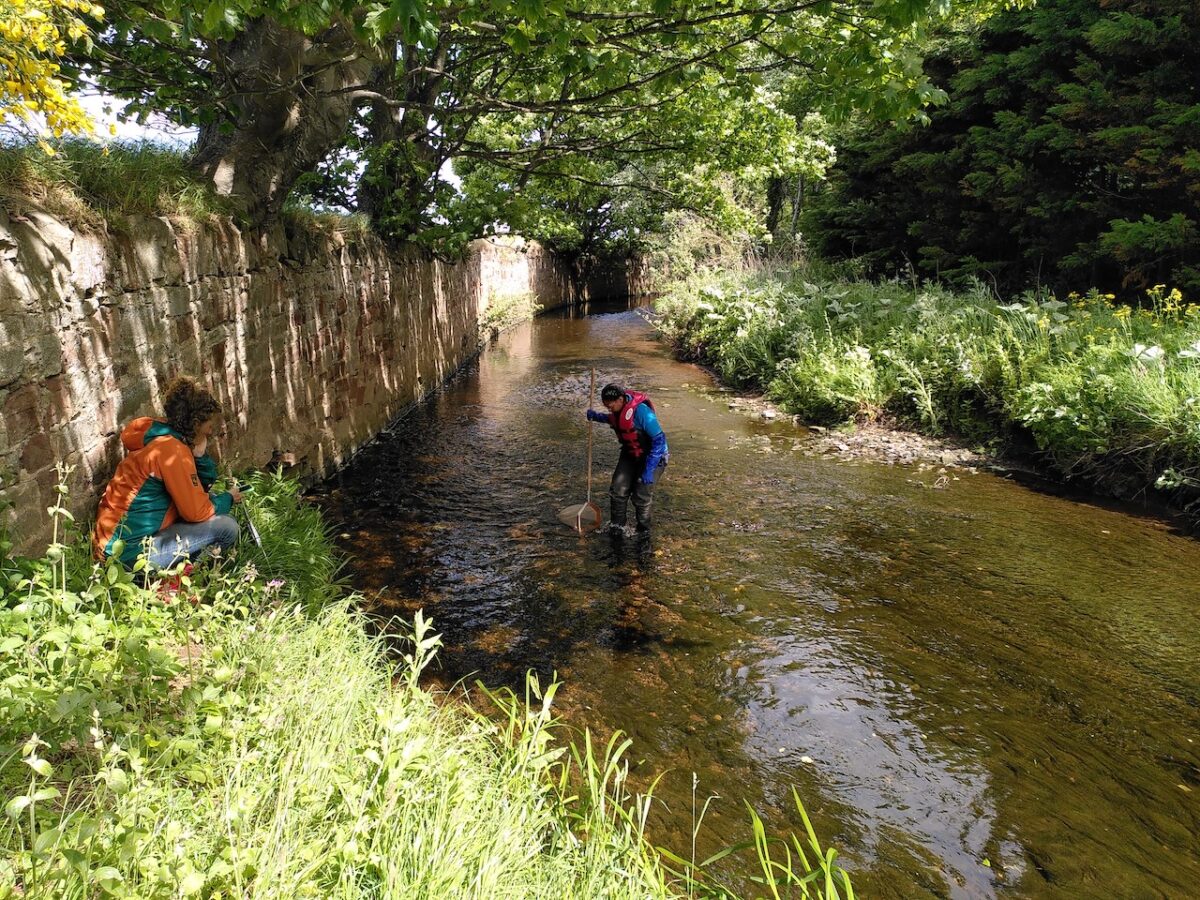
Riverfly monitoring is a UK wide citizen science project which, in Scotland, is coordinated and supported by Buglife.
Riverflies are invertebrates that spend most of their life cycle in a river, stream, pond or lake. The three key groups are stoneflies, caddisflies and mayflies. Along with other freshwater invertebrates, they are at the heart of the freshwater ecosystem and are a vital link in the aquatic food chain. Their common characteristics of limited mobility, relatively long life cycle, presence throughout the year, and specific tolerances to changes in environmental conditions make them good indicators of water quality.
We now have ten volunteers who are trained as ‘River Guardians’ and have been carrying out monthly monitoring for riverflies on the Biel Water near West Barns from May through to October this year. Monitoring will resume in April 2026.
The number and diversity of freshwater invertebrates is used to generate a so-called ARMI (Anglers Rivers Monitoring Initiative) score which is compared against a ‘trigger’ score that has been allocated to the Biel Water. Trigger scores are worked out using a model – River Invertebrate Classification Tool (RICT) – which calculates what the RMI score for a “pristine” watercourse would be and then uses an Environmental Quality Ratio to work out the minimal healthy RMI score for the site. The trigger level for our site at West Barns is 7.
This was comfortably exceeded in the late spring and early summer when our sample scored 13, with good numbers of cased and uncased caddis, stonefly, flat bodied clingers, olives and blue-winged olives along with some freshwater shrimp. By October however we had observed an alarming decline in the number and diversity of the eight target species and our sample only scored 4, triggering a report to SEPA. The samples taken in September and October contained a large number of freshwater shrimp, which are more tolerant of organic pollution, along with a very small number of cased caddisfly and none at all of the other target riverfly species.
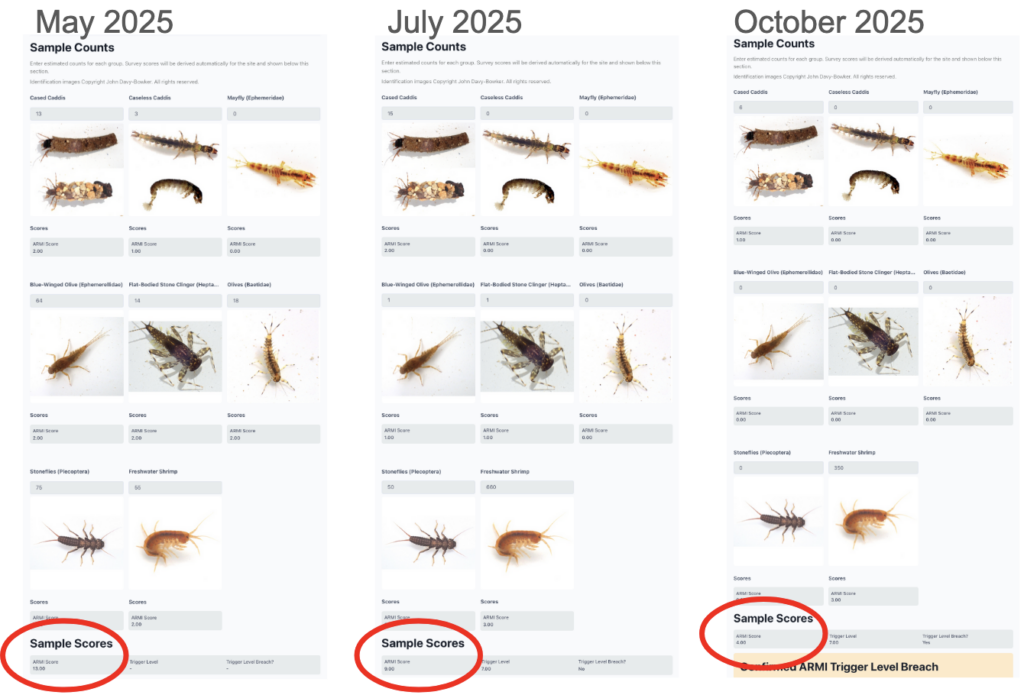
Initially we had assumed that the issue may have been due to the hot summer and low water level, as riverflies prefer cooler, well oxygenated water. Now however, it appears that there is definitely some sort of pollution that is affecting the water quality and causing this alarming decline in freshwater invertebrates. We are currently not at all clear what this pollution may be or where it is coming from and are waiting to hear what investigations SEPA may carry out.
Next year we are hoping to recruit more volunteers and to start sampling in more locations, upstream in the Biel catchment, so that we can build up a more comprehensive picture of the water quality in the whole catchment, as well as in other locations across the coastal burns in East Lammermuir. We hope to also be able to start sampling for chemical and well as biological water quality.
New volunteers are welcome so please do get in touch if you are interested to find out more about what is involved and how to get trained: riverfly@sustainingdunbar.org